The Leading Edge Technology for Subsurface Pipe Sensing and Imaging
Geofoton – Distributed Acoustic Sensing (DAS)
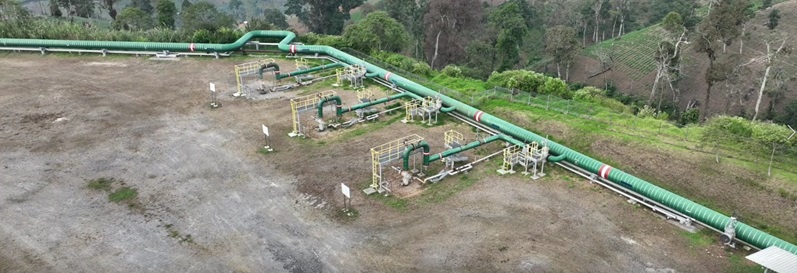
The Rock Fluid imaging laboratory develops technology and utilizes fiber optic sensors by detecting and monitoring acoustic signals. This technology can access various parameters, which can be applied in monitoring surface and subsurface facilities in the oil and gas industry, as well as other industries.
Benefit :
– Long-distance coverage (Wide monitoring area up to tens of kilometers)
– Real-time monitoring
– High sensitivity and precise location of the leak along the pipeline
– Resistance to electromagnetic interference (immune to Electromagnetic Interference (EMI) and corrosion resistant, large aperture, dense array)
– No need for electrical power in sensing zone (no electronics)
– Multi-parameter monitoring with a single cable
– Continuous sensor
– Light, small, and slim package
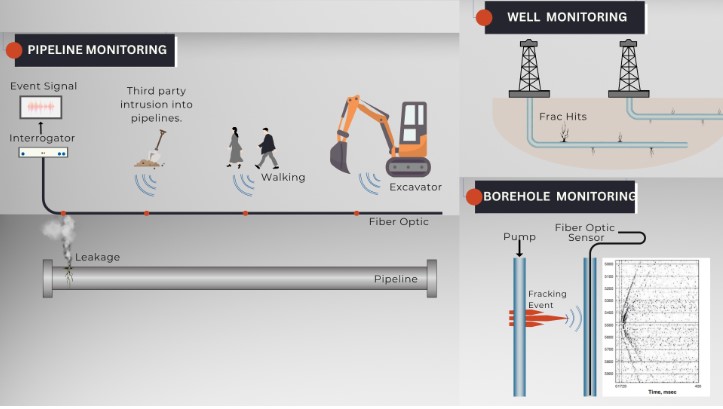
Application :
-Pipeline Monitoring and Leak Detection
– Borehole Monitoring
– Fracture Monitoring During and After Hydrofracturing
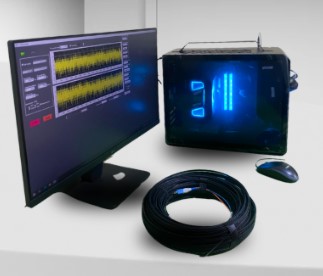
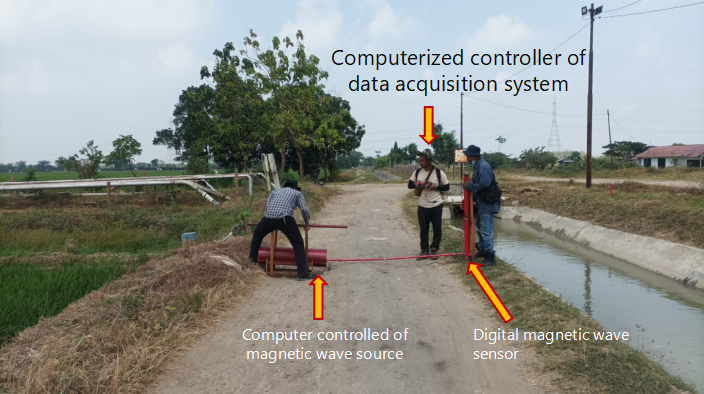
ELECTROMAGNETIC WAVE INDUCTION
This system uses an electromagnetic waveform with a particular signal that can be readily distinguished from surrounding noise, such as electromagnetic radiation from high-voltage power lines.
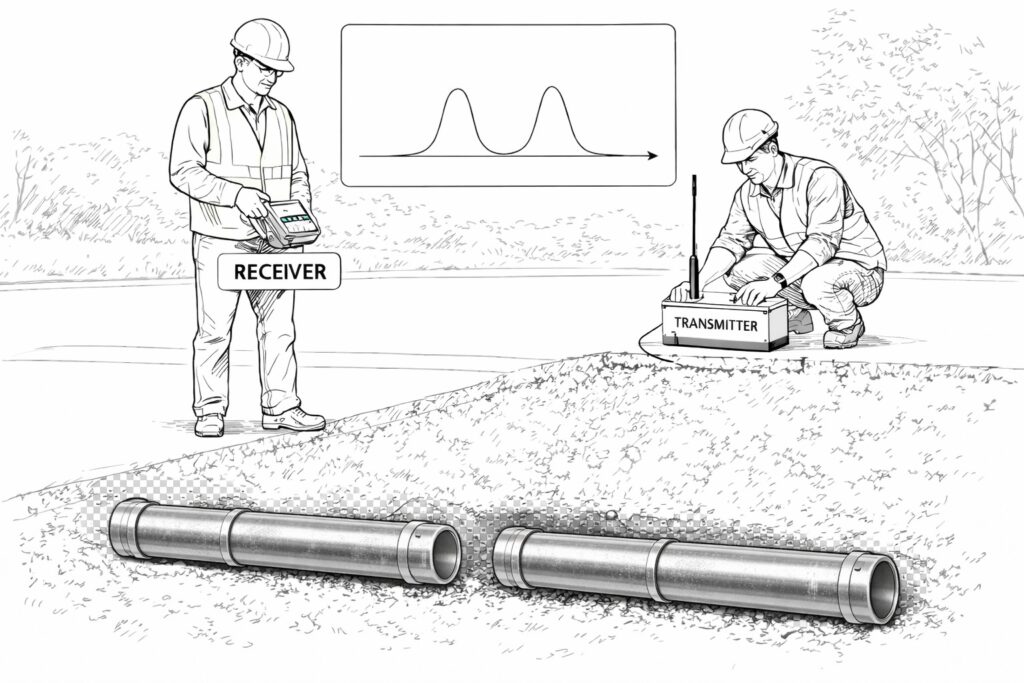
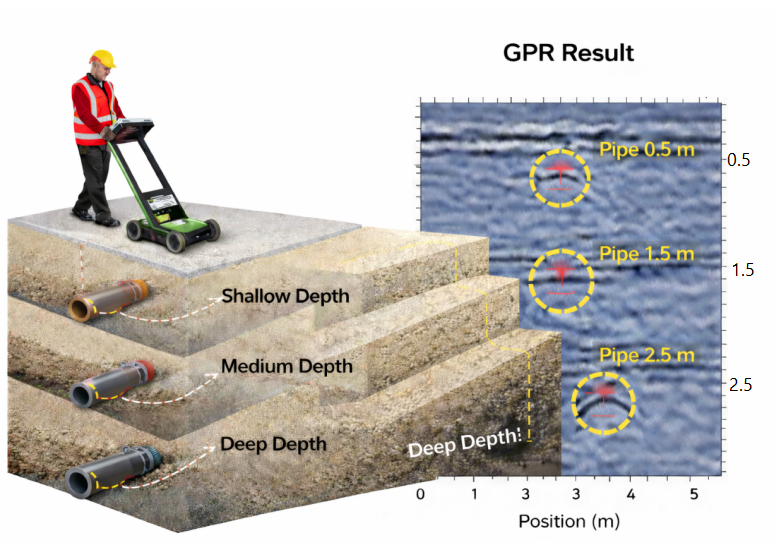
Georadar – Ground Penetrating Radar (GPR)
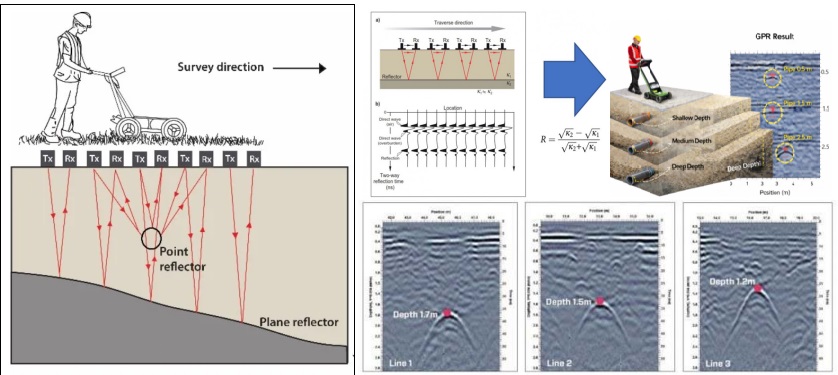
The Survey of Ground Penetrating Radar
– Uses radar as electromagnetic wave source
– The frequency ranges from 150 MHz to 350 MHz
– Safe, non-damaging, and capable of high-resolution measurement